- VQR
- RESEARCH
- UNIVERSITIES
- RESEARCH INSTITUTES
The Report presents the results of an exercise that broadens the scope of evaluation, strengthens analysis by disciplinary area and institutional size, and provides a comprehensive map of the national research system.
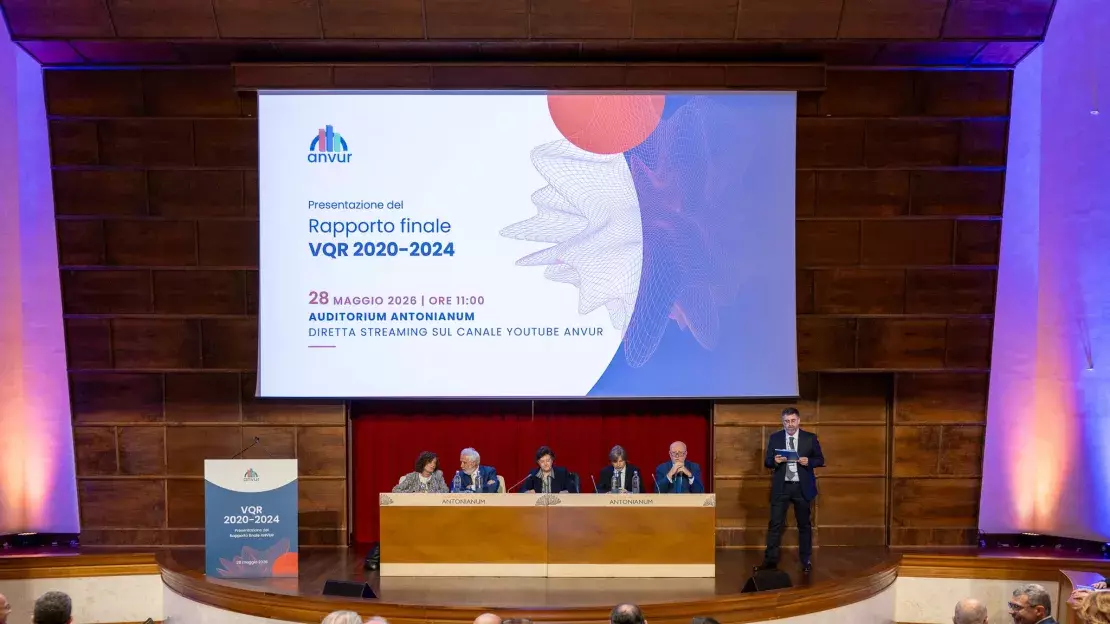
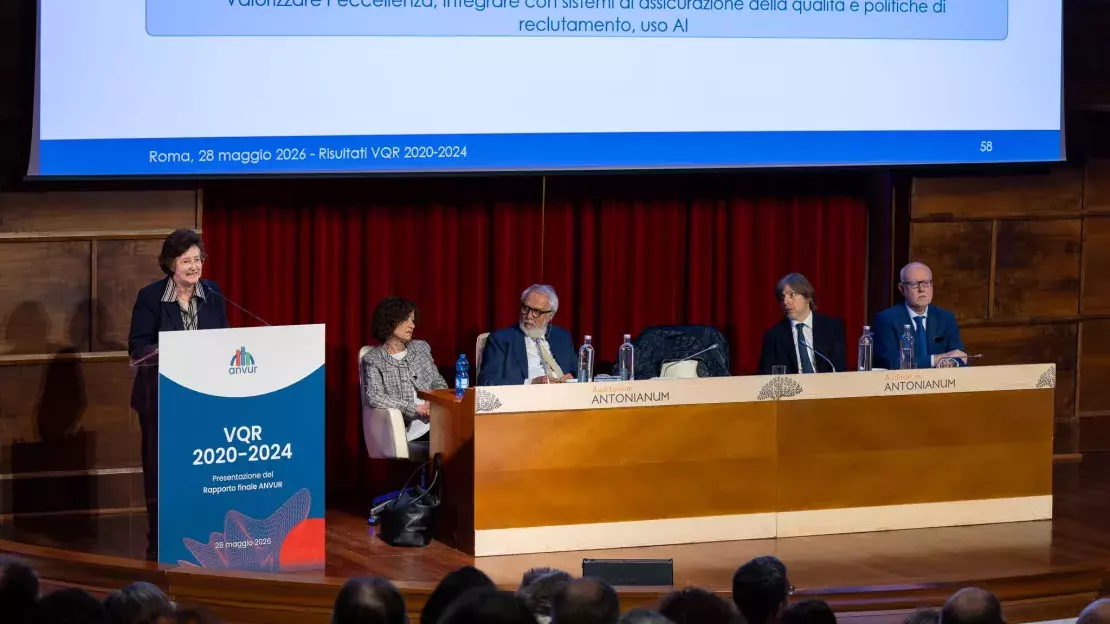
ANVUR today presented the Final Report of the Research Quality Evaluation 2020–2024 (VQR4), the fourth national exercise assessing the outcomes of scientific production, knowledge valorisation activities, the ability to attract competitive international projects and, for the first time on an experimental basis and limited to research institutes and voluntary institutions, research infrastructures. The Report offers a system-wide perspective rather than a ranking approach, providing a broad and structured knowledge base on the different dimensions of research activity.
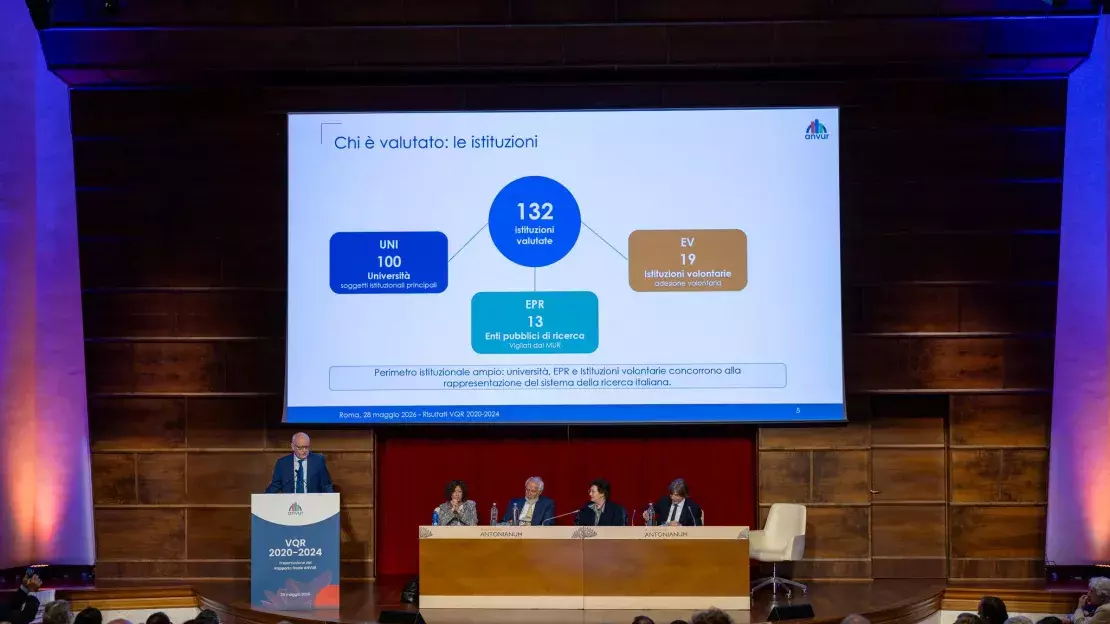
The research system. The scale of the exercise is itself a significant result. A total of 132 institutions participated, including 100 universities, 13 public research institutes supervised by the MUR, and 19 voluntary institutions. Accredited researchers numbered 75,869, comprising 33,099 permanent researchers and 42,770 newly recruited or promoted researchers. Of the 187,059 expected research outputs, 186,540 were actually submitted, corresponding to 99.72 per cent of the total expected. This figure reflects the system’s strong operational resilience and the very high level of institutional participation in the evaluation process.
In addition, 13,276 research outputs were submitted on behalf of researchers who do not currently work within the Italian university system but who obtained a doctoral degree during the period 2017–2023, further strengthening the VQR’s ability to provide a comprehensive representation of the Italian research system. Consequently, the total number of outputs evaluated by the Evaluation Expert Panels (GEV) amounted to 199,816.
Disciplinary areas provide a comprehensive picture. The distribution of researchers and submitted outputs reveals considerable disciplinary heterogeneity. The largest areas in terms of scale are Medical Sciences and Industrial and Information Engineering, followed by Biological Sciences and Physical Sciences. The linguistic and typological composition of outputs also varies significantly. Overall, English predominates, accounting for approximately 83 per cent of submitted outputs, while Italian retains a prominent role in the areas of Ancient, Philological-Literary and Art-Historical Sciences, Historical, Philosophical and Educational Sciences, and Legal Sciences. With regard to output types, journal articles account for approximately 89 per cent of the total, although monographs and book chapters remain structurally important in the humanities and legal fields.
The distribution of outputs across quality classes is concentrated mainly in classes B (Excellent) and C (Standard), while the incidence of class A (Outstanding) varies across disciplinary areas. Lower quality classes D and E remain marginal overall. However, these data should not be used for direct comparisons between different disciplinary areas, but rather for comparisons within homogeneous disciplinary contexts. The results are intended as a tool for institutional knowledge and improvement, both at the disciplinary-area level and at the departmental level.
From a temporal perspective, submitted outputs show a slight concentration in the first two years of the observation period and a more marked decline in 2024. Looking over a longer timeframe, the Report identifies a progressive convergence of university performance around the average and a reduction in extreme deviations compared with the first VQR exercises. This signals greater system cohesion, while also highlighting the continuing need to enhance the recognition of outstanding research outputs within resource allocation mechanisms.
A particularly significant chapter of the Report concerns knowledge valorisation. A total of 858 case studies were submitted, mainly concentrated in public engagement (27%), technology transfer (26.3%), and the production and management of public goods (24.5%), which together account for more than three-quarters of the total. The geographical distribution presented in the Report refers specifically to these case studies. For Public Research Institutes, public engagement is by far the predominant category, with 73 case studies. Online universities show a higher relative incidence of case studies related to the themes of the UN 2030 Agenda, while technology transfer predominates among voluntary institutions.
The international dimension also plays a stronger role within the evaluation framework. A total of 6,493 competitive international projects were admitted for evaluation, showing a strong concentration of scientific leadership in the area of Industrial and Information Engineering, followed by Physical Sciences and Biological Sciences. Eleven research infrastructures were evaluated, mainly distributed across the ESFRI areas of Physics and Engineering, Digital, and Environment.
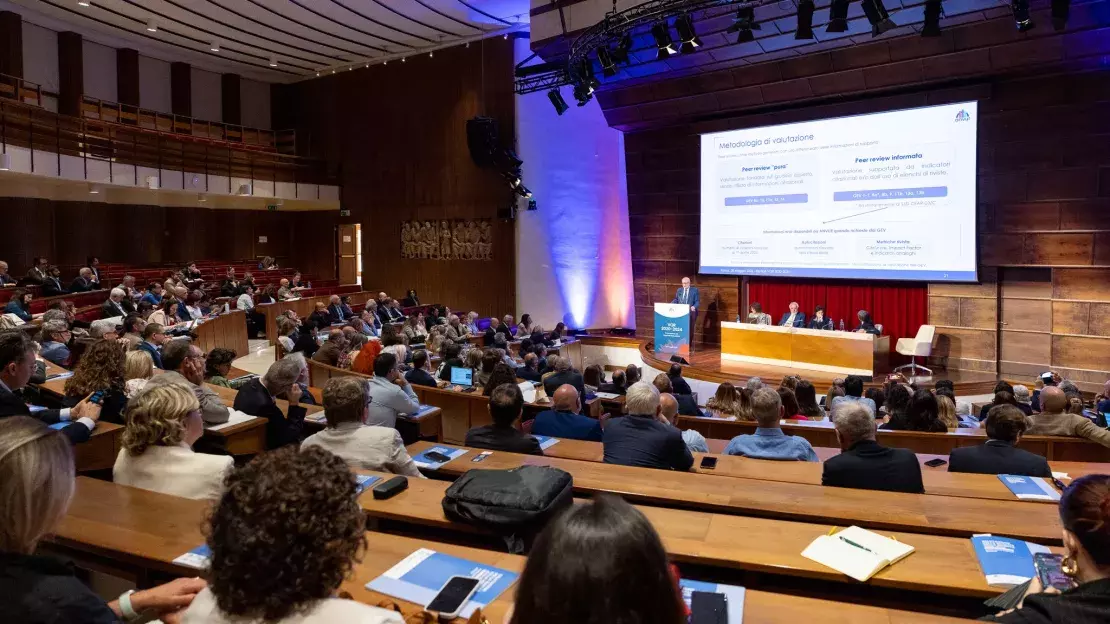
Evaluation methodology and comparison with the previous exercise. The evaluation is based on peer review, informed where appropriate by citation indicators and always accompanied by specific safeguards regarding the treatment of self-citations. The assessment criteria for research outputs are originality, methodology, and impact. The Report also highlights attention to reproducibility, transparency, and data accessibility. The official presentation indicates that internal reviews conducted within the GEVs predominate across most STEM and life science areas, while the use of external reviewers is more common in the humanities, legal studies, and architecture. ANVUR involved 723 experts within the GEVs, 25 assistants, and 6,740 external reviewers, confirming the robustness of the evaluation process.
Compared with the VQR 2015–2019, the new exercise records an increase in accredited researchers, from 65,119 to 75,869; in outputs submitted by institutions, from 182,648 to 186,540; and in case studies, from 676 to 858. At the same time, the total number of evaluated institutions decreased from 134 to 132, reflecting the combined effect of an increase in universities from 98 to 100 and a decrease in public research institutes and voluntary institutions.
Professor Alessandra Celletti, Vice-President and member of the ANVUR Governing Board, commented:“The VQR represents a complex and demanding process, which we have undertaken with transparency and responsibility, in the hope that the evaluation results will provide a valuable contribution to promoting research quality and enhancing knowledge valorisation.”